Short answer
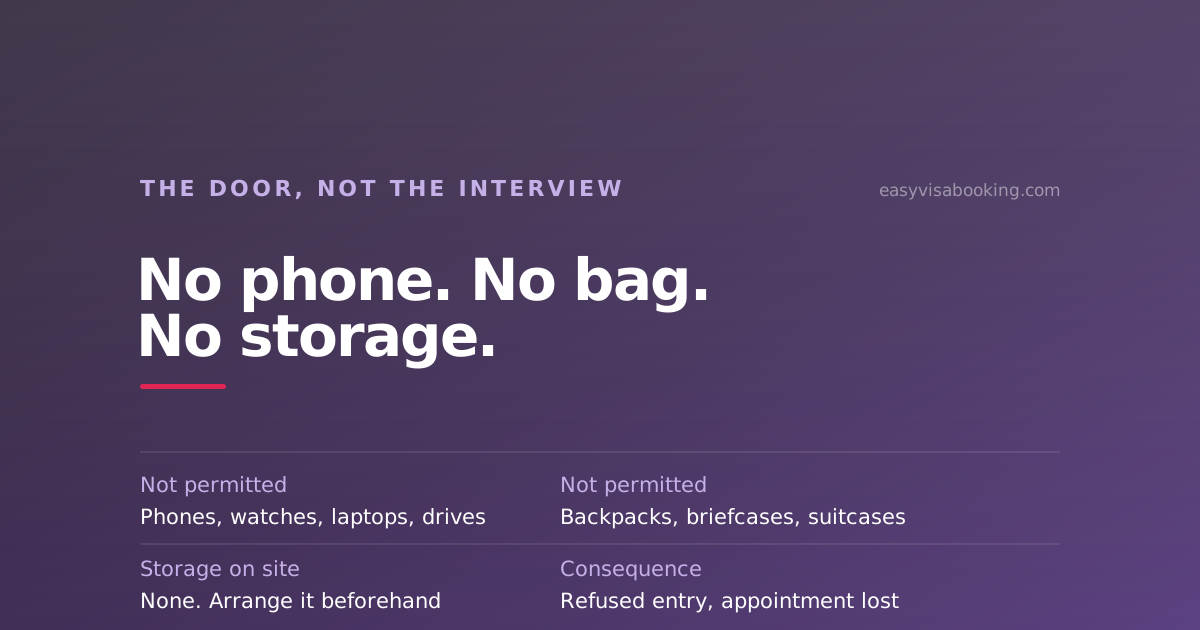
Bring your passport, your printed DS-160 confirmation page, your appointment confirmation, a compliant photograph and the documents that support what your form says. Bring nothing else. Electronic devices and large bags are prohibited at the door, there is no storage at the building, and arriving with them can mean being refused entry and losing the appointment.
The door rules, which matter more than the folder
- Not permitted
- Mobile phones, smart watches, digital diaries, cameras, audio and video media, flash drives, memory sticks, Bluetooth devices, laptops, tablets, music players
- Also not permitted
- Large shoulder bags, handbags, travel bags, backpacks, briefcases, suitcases
- Generally permitted
- An unsealed plastic bag, a small cloth bag or a zip folder of application papers
- Storage on site
- None, at the embassy, the consulate or the visa application centre
- If you arrive with them
- You are not admitted, and the appointment can be cancelled
The door rules, first
Every other guide starts with documents. We are starting here because this is what actually costs people appointments, and it is entirely avoidable.
US embassies and consulates prohibit battery-operated and electronic devices for visa interviews. The published list is long and specific: mobile phones, smart watches, digital diaries, pagers, cameras, audio and video cassettes, compact discs, MP3 players, floppy disks, flash drives, memory sticks, Bluetooth devices, laptops and tablets. Large bags are prohibited too: shoulder bags, handbags, travel bags, backpacks, briefcases and suitcases. What is generally allowed is something you can carry in your hand, such as an unsealed plastic bag, a small cloth bag or a zip folder holding your papers.
Now the part that turns a rule into a lost appointment: there is no facility to store prohibited items, not at the embassy, not at the consulate, and not at the visa application centre. If you arrive with a phone, there is nowhere to leave it. Guidance states plainly that if you have electronics, bags and wallets with you, you will not be allowed in, and that arriving with additional items can result in the appointment being cancelled.
Plan the phone before you plan the paperwork
This sounds trivial until you consider what it means at a post where the next available appointment is eleven months away. Being sent back to the street with a backpack is not a delay of an hour, it can be a delay of the better part of a year, and there is no appeal and no sympathy available for it. Work out where your phone is going before you leave home: a companion who stays outside, a locker at a nearby shop or station, a hotel, or simply leaving it behind. It is the single highest-value five minutes of planning in this whole process.
What to actually carry
The core set, which applies almost everywhere:
- Your current passport, valid, and any previous passports containing US visas if you have them.
- The printed DS-160 confirmation page, with a legible barcode. This is your admission, and posts refuse entry without the physical printout. Check the barcode number matches the one linked to your appointment, and bring both pages if you submitted a second DS-160 to correct an error.
- Your appointment confirmation, printed, showing the current date. If you have rescheduled, make sure it is the reissued one rather than the original.
- A compliant photograph, even if your upload succeeded. If the confirmation page shows an X where the photo should be, the upload failed and the printed photo becomes essential.
- Your fee receipt, where your post asks for it.
- Category-specific documents: the original I-20 or DS-2019 and SEVIS receipt for students, the petition approval notice for petition-based categories.
Requirements vary by post and category, so read your own post's instructions alongside this. Where they differ, they win.
Supporting documents, and how much is too much
The instinct is to bring everything. Resist it, for a reason that is about how the interview works rather than about tidiness.
A consular interview is short. An officer forms a view and asks for what they want to see. Documents are there to corroborate what your DS-160 already says, not to make an argument on their own. A thick unrequested folder does not strengthen a weak case, and it can make a straightforward one look defensive.
A useful test for each document: does this support something my form already states? If yes, bring it, organised so you can find it in seconds. If it is there in case the officer asks something you have not thought about, it is probably padding.
What typically earns its place, depending on your category and purpose:
- Evidence of employment or study, and of the ties that mean you will return
- Financial evidence consistent with the trip you have described
- An invitation or itinerary, where one exists and matches your stated purpose
- For students, the original programme documents rather than copies
- For petition-based cases, the approval notice and employer letter
Not sure your confirmation page is the right one? A replaced DS-160 generates a new number, and a mismatch is discovered at the counter. Read DS-160 mistakes that delay your appointment.
How the day goes
Broadly the same shape at most posts, with local variations.
- Queue outside. Expect to wait in the open before security, often for a while. Dress for the weather, because there is usually nowhere to shelter.
- Security screening. This is where the door rules bite. Nothing prohibited gets past it and nothing can be left behind.
- Document check. Passport, DS-160 confirmation, appointment confirmation.
- Biometrics, where they are taken at the interview post rather than at a separate appointment beforehand.
- The interview. Usually short, conducted through a window, standing. Answer what is asked, briefly and consistently with your form.
- The outcome. You are generally told at the window whether the application is approved, refused, or requires further administrative processing. If approved, your passport is retained and returned through the delivery arrangement for your post.
Two practical notes. Arriving very early rarely gets you seen sooner and usually means standing outside for longer. And administrative processing, if it happens, is a separate stage with an unpredictable length that no amount of preparation on the day affects.
The four avoidable ways to lose an appointment
| What goes wrong | Where it is discovered | Prevention |
|---|---|---|
| A phone, watch or bag | Security screening, with nowhere to store it | Decide where it goes before you leave home |
| No printed DS-160 confirmation | The document check at the door | Print it the day before and put it with your passport |
| A superseded appointment confirmation | The document check, after a reschedule | Print the reissued letter and bin the old one |
| Arriving late | The queue, which closes | Travel for the traffic you might hit, not the traffic you expect |
Consequences vary by post, and some will accommodate a late arrival where others will not. None of them can store your laptop. Retrieved 19 August 2026.
If you do lose the date
Rebooking is the same problem as any other earlier-date problem, and the honest options are the same. Two of them are free.
Getting back to a workable interview date
Costs exclude the US government fees everybody pays: the MRV application fee, and the $250 visa integrity fee where your post is collecting it. Third-party pricing changes, so verify with each provider directly.
| Option | Cost | What it actually does | Best suited to |
|---|---|---|---|
| Do it yourself | Free | You check the portal and rebook or reschedule when something opens. | Flexible dates, a soft deadline |
| Expedite request to the consulate | Free | A discretionary decision on documented urgency. A missed appointment is not urgency. | Medical emergencies, funerals, student start dates |
| Slot-availability websites | Free tier; paid alert plans, billed whether or not a date appears | Surfaces availability and alerts you. You still book it yourself. | Applicants who can act within seconds |
| $750 government paid expedite | $750 per applicant, up front and non-refundable | An interview within 10 business days, at Mission Mexico or Mission Canada only, B-1/B-2 only. | A hard deadline inside weeks, at one of those posts |
| Easy Visa Booking us | From $100, paid only on success | Our team takes on the rescheduling work for your consulate and keeps working it until an earlier interview date opens. The wider your acceptable date range, the more often it moves. | Long waits, a fixed deadline, and no time to watch a portal |
The categories above are the alternatives you are already comparing, not endorsements. We have no commercial relationship with any provider in them, and pricing models change, so verify current terms directly.
What our row gives you that the ones above it do not
- You pay only if the date actually moves. From $100, charged when an earlier interview is secured. Ours is the only paid row where a result you did not get costs you nothing.
- The watching stops being your problem. Every free and alert-based route ends the same way: you, logged in, acting within seconds, at whatever hour the opening lands. Our team carries the rescheduling work instead.
- A wide date range is the biggest lever you control. If you can accept any date inside a broad window rather than one specific morning, the odds of moving your interview go up sharply. Tell us the widest range your travel plans allow and we will tell you honestly how it looks before you commit to anything.
- Nothing is asked on trust. A named founder, real support channels, published terms and refund policy, and a written statement that nobody can promise you a date.
If your post is booking inside a couple of months, rebooking yourself is straightforward and you should pay nobody. This page is worth more to you as prevention than we are as a cure.
The reader who should not pay anybody, us included, is the one reading this the night before their interview. Print the confirmation, sort out where the phone is going, and go to bed. Nothing else on this site is relevant to you tonight.
Frequently asked questions
Can I take my phone to a US visa interview?
No. Battery-operated and electronic devices are not permitted at US embassies and consulates for visa interviews, and that list includes mobile phones, smart watches, digital diaries, cameras, audio and video media, flash drives, memory sticks, Bluetooth devices, laptops, tablets and portable music players. There is no facility on site to store them, so you have to make an arrangement before you arrive.
What happens if I arrive with prohibited items?
You will not be allowed into the building, and consular guidance states that arriving with additional items can result in the appointment being cancelled. Because there is no storage at the embassy, consulate or visa application centre, that is not a problem you can solve at the door. It is the single most avoidable way to lose an appointment you waited months for.
What bag can I bring?
Only something you can carry in your hand. Large shoulder bags, handbags, travel bags, backpacks, briefcases and suitcases are prohibited. What is generally permitted is an unsealed plastic bag, a small cloth bag or a zip folder containing your application papers. Pack for that constraint rather than planning to leave things somewhere.
What documents do I actually need?
At minimum, your passport, your printed DS-160 confirmation page with the barcode, your appointment confirmation with the correct current date, and a compliant photograph. Beyond that, bring what supports your stated purpose of travel and matches what your DS-160 says. Requirements vary by post and category, so check your own post's instructions as well.
Do I need to print the DS-160 confirmation page?
Yes. The barcode on the printed confirmation page is what identifies your application at the counter, and posts routinely refuse entry without the physical printout. Check that the barcode number matches the one linked to your appointment. If you submitted a second DS-160 to correct an error, bring both confirmation pages.
Should I bring lots of supporting documents?
Bring what is relevant and organised, not everything you own. A consular interview is short, and an officer will ask for what they want to see. A thick folder of unrequested paperwork does not improve a weak case and can make an organised one look anxious. The test is whether each document supports what your DS-160 already says.
How early should I arrive?
Follow the time on your appointment confirmation, and expect a queue outside before security. Arriving very early rarely gets you seen sooner and often means standing in the open for longer. Arriving late can mean not being seen at all, which at a post with a long queue is an expensive way to lose a day.
The bottom line
The document list is short and most people get it right. What goes wrong is the door: electronics and large bags are prohibited, there is nowhere to store them, and arriving with them can cost you the appointment entirely.
So plan the day in this order. Where is the phone going? Is the DS-160 confirmation printed, with a barcode that matches the booking? Is the appointment confirmation the current one rather than a superseded copy? Only then think about supporting documents.
And keep those documents proportionate. They exist to corroborate what your form already says. Bring what does that, organised, and leave the rest at home with your phone.
What nobody can promise you
Nobody outside the US government can guarantee an interview slot, a timeframe, or a visa decision. We cannot either, and no document list changes how an application is adjudicated. What we offer is that the rescheduling work gets done properly and that you pay only if it produces a result.
Sources
- US Travel Docs, Attend your interview. The prohibited items list, the bag restrictions, that no storage facility is available at the embassy, consulate or visa application centre, and that arriving with additional items can result in the appointment being cancelled. Retrieved 19 August 2026.
- US Embassy and Consulates in India, Security restrictions. The mission's own statement of the security restrictions applied at entry. Retrieved 19 August 2026.
- US Department of State, DS-160: Online Nonimmigrant Visa Application. The confirmation page requirement and the photograph standards. Retrieved 19 August 2026.
- US Department of State, Visitor Visa. What a B-1/B-2 applicant is expected to establish at interview, which is what your documents should support. Retrieved 19 August 2026.
Published 4 September 2026. Security rules and document requirements differ by post and by visa category. Where this page summarises them, your own post's instructions are the authority. This article is general information and is not legal or immigration advice.
Losing an appointment at the door is the worst way to lose one
At a post where the next date is months away, being turned back over a phone or a backpack costs far more than the inconvenience suggests. This page exists so that does not happen to you. If it already has, or if you need to move an appointment for any other reason, our team can take the rescheduling work on. Tell us your post, your current date and the widest range you could accept, and we will tell you honestly whether it is worth paying us at all.
- From $100, and you pay only if we secure you an earlier date
- The wider the date range you can accept, the more often we can move it
- No guarantee of a date, stated plainly before you decide anything
Easy Visa Booking is an independent scheduling assistance service, not affiliated with the US Department of State, any US Embassy or Consulate, CGI Federal or the AIS portal. All appointments are made through the official portal.